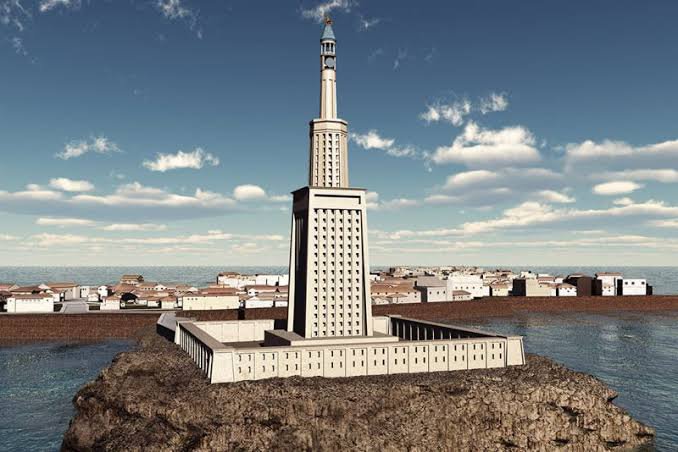
The Pharos of Alexandria was a lighthouse completed in about 280 BC and was used to warn ships of the rocks surrounding the port of Alexandria, Egypt. The building measured over 110 metres to the top. During the day polished bronzed mirrors reflected the sunlight, and at night a fire burned that could be seen up to 50 kilometres away. A spiral ramp led from the ground to the top.
The gigantic lighthouse was a real survivor – it stood for over 1,500 years and survived being buffeted by massive waves and countless earthquakes.
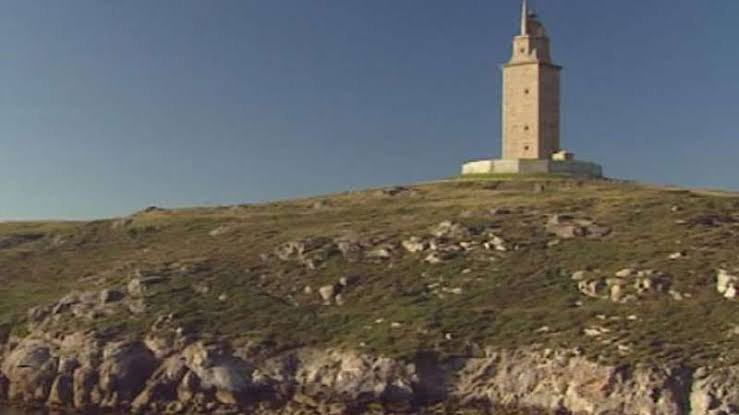
It was built by a man called Sostratus who, in order to get the credit for this Wonder of the World, sneakily carved his name into the stone, and plastered over it. On top of the plaster he carved a dedication to the ruler of Egypt. In time, the plaster wore away and his own dedication, ‘Sostratus of Cnidos, son of Dexiphanes, to the saviour god’s, for sailors’, was left permanently displayed.
In 1994, an archaeologist located huge masonry blocks believed to be from the lighthouse, which was toppled by an earthquake in the 1300s.

